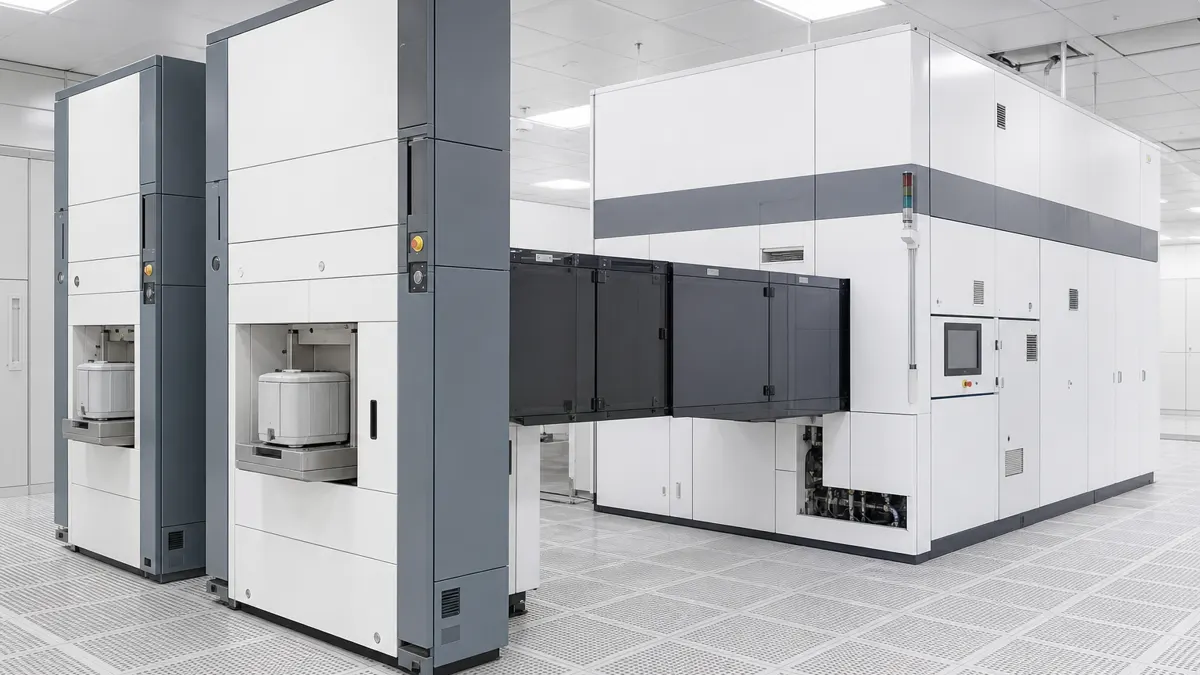
Fab floor
What a coater/developer track actually does
The wafer arrives at a loadport on a cabinet that is already mid-cycle. A robot has other disks on other plates. Next door, through an interface, is the scanner. The track’s work is everything that is not the exposure: put the film on, heat it, trim the rim, hand the wafer to the lens, take it back, bake the latent image, develop, rinse, and close the pod.
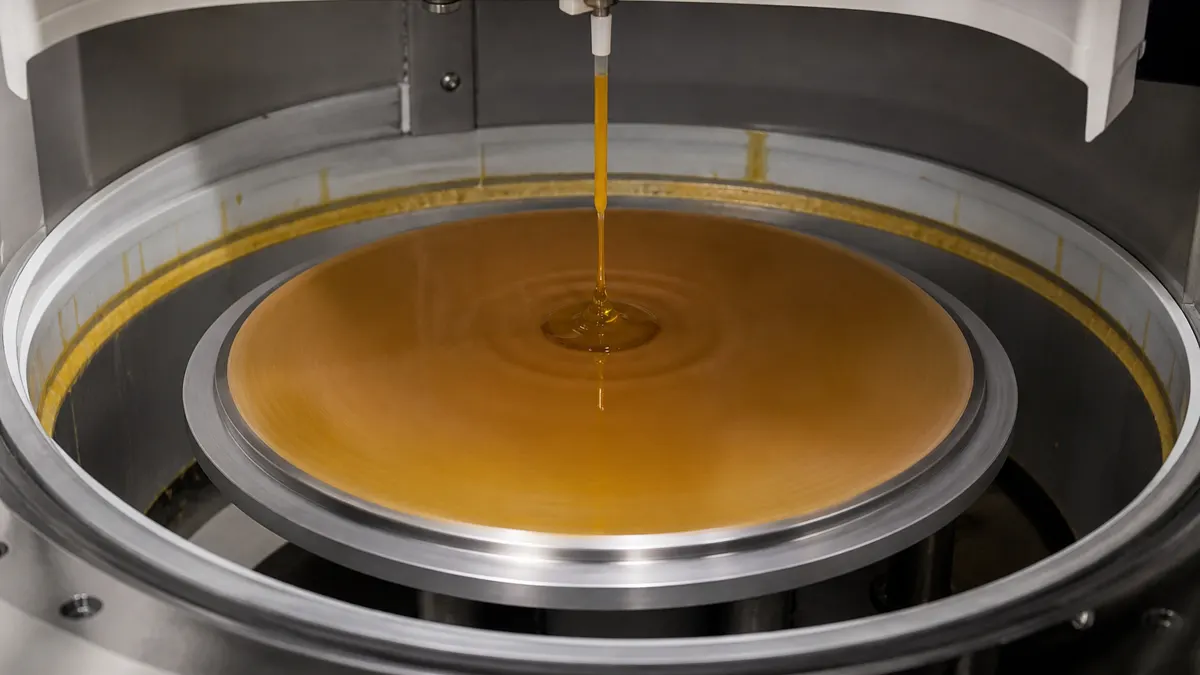
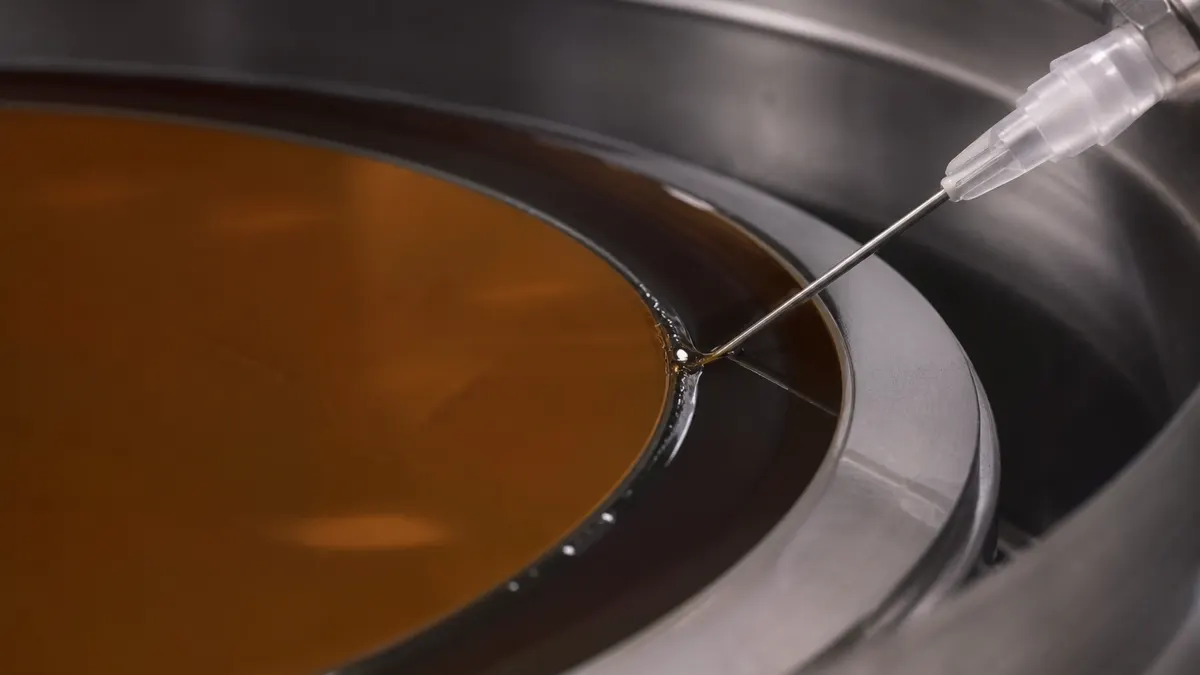
Coat is the first wet module that changes the stack. The wafer drops onto a spin chuck in a cup. A nozzle dispenses resist — or a bottom antireflector first, then resist — while the chuck turns. Thickness is a viscosity and spin-speed problem. Prime, if the recipe wants it, was an earlier plate: vapor adhesion promoter, then a chill so the cup sees a known temperature. The coat module is a spinner with a bottle and an exhaust. It is not the printer.
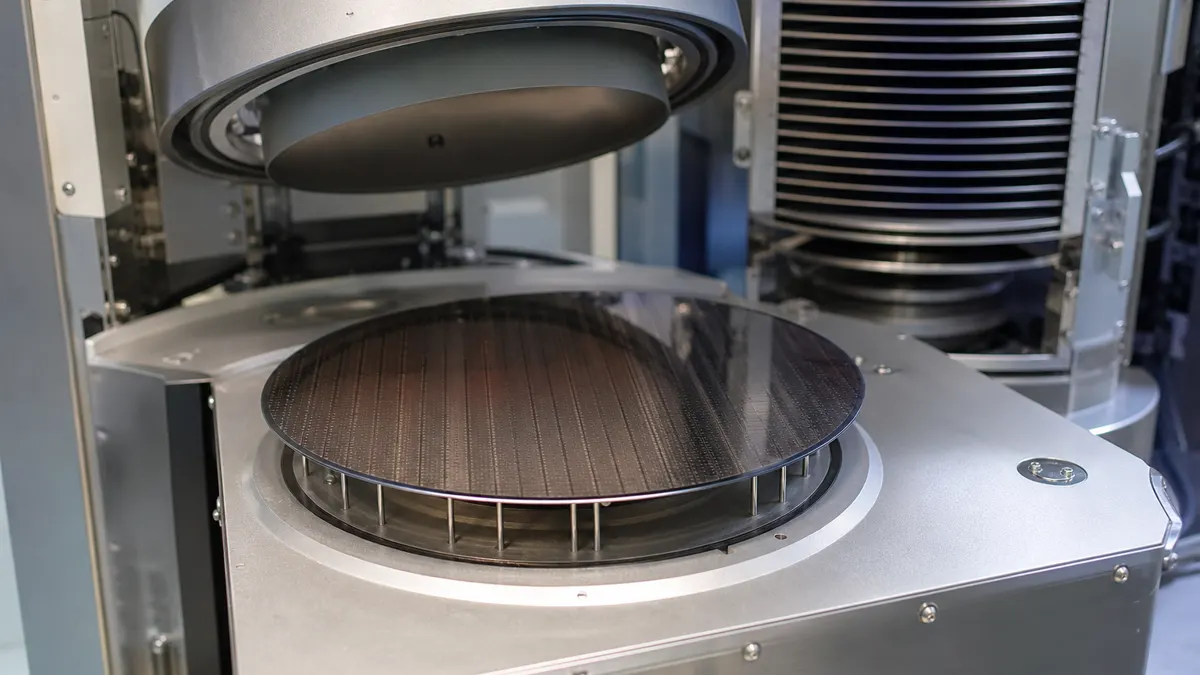
Bake is a plate, then another plate. After coat the wafer sits on a hotplate until solvent leaves. A chill plate follows so the next station is not guessing the incoming temperature. After the scanner there is a second heat — the post-exposure bake that sets a chemically amplified latent image — and another chill. The stacked plates are why the cabinet is tall. A wafer that missed the right plate is a different film, not an underdeveloped one.
Edge bead is a solvent trim, usually still in the coat cup or on a short extra spin, while the wafer turns. The rim, and often the backside, get a rinse so leftover resist does not flake onto a chuck or into the scanner. The bead is not part of the die. Leaving it is a contamination choice.
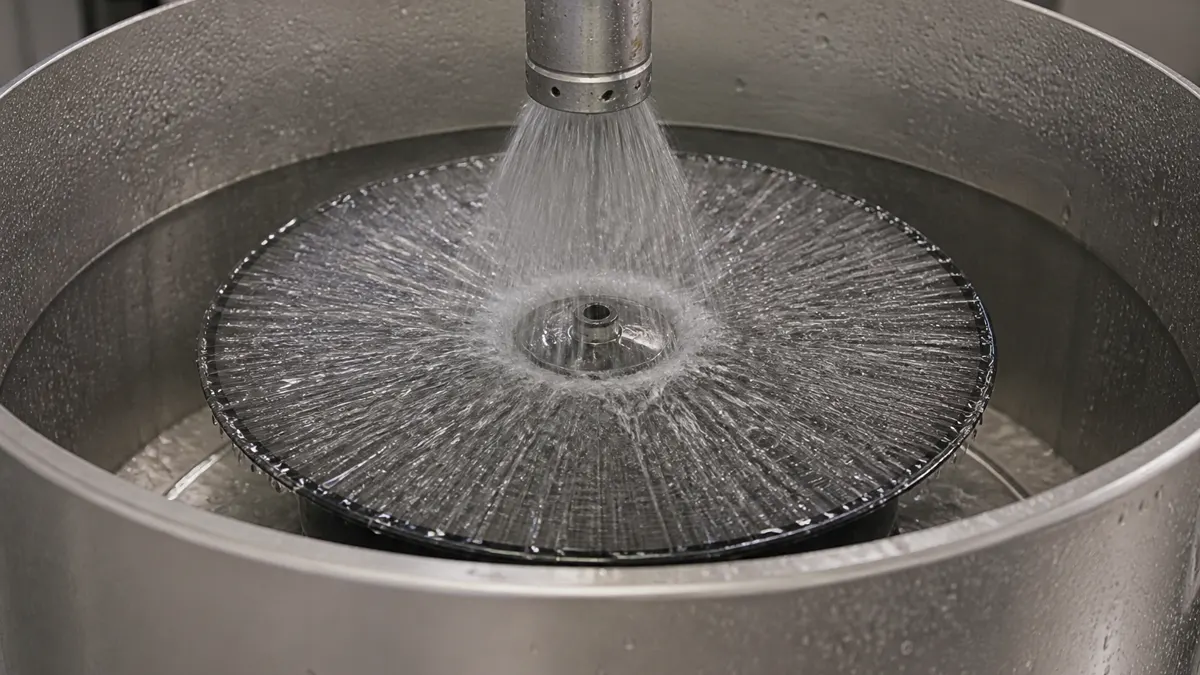
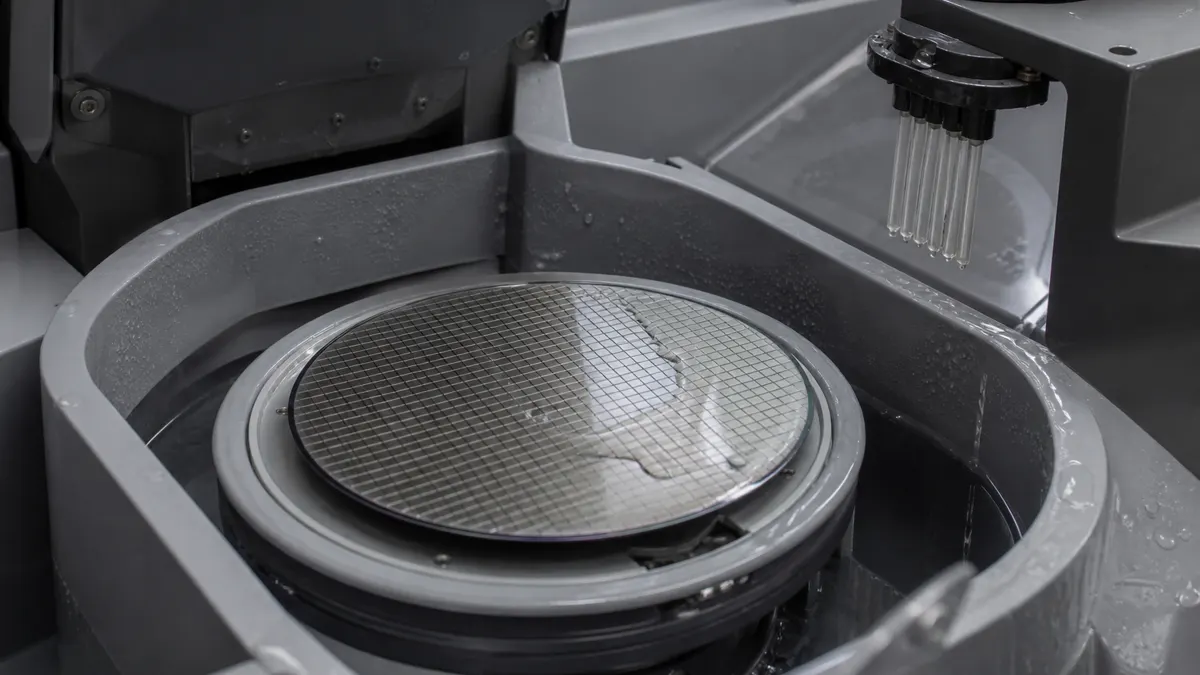
The wafer leaves for the exposure and comes back. Develop is the second wet visit: a puddle or a scanned stream of developer on the exposed film. What dissolves was the soluble resist. What stays is the stencil the etch will see. Rinse follows in the same cup — deionized water, then a spin dry. A short, dirty, or off-center rinse is a defect, not a footnote.
The recipe, not the brochure, picks the extras. Some lots coat a BARC. Some take a hard bake after develop. Some see an in-line thickness or defect inspect before the door closes. The walk that does not change is coat, bake, edge, expose, bake, develop, rinse. The track is the machine that stages that walk while the scanner prints, with several wafers in several modules at once. A coat cup is a station the wafer has to leave on time.