Fab floor
What CMP is actually doing on the line
Chemical-mechanical planarization is a polish that has to leave the wafer flat enough for the next lithography pass. The wafer sits face-down in a carrier. A rotating pad on a platen takes the slurry. Downforce, rotation, and chemistry remove the high spots first. The station is not a rinse. It is a controlled grind with a chemical assist.
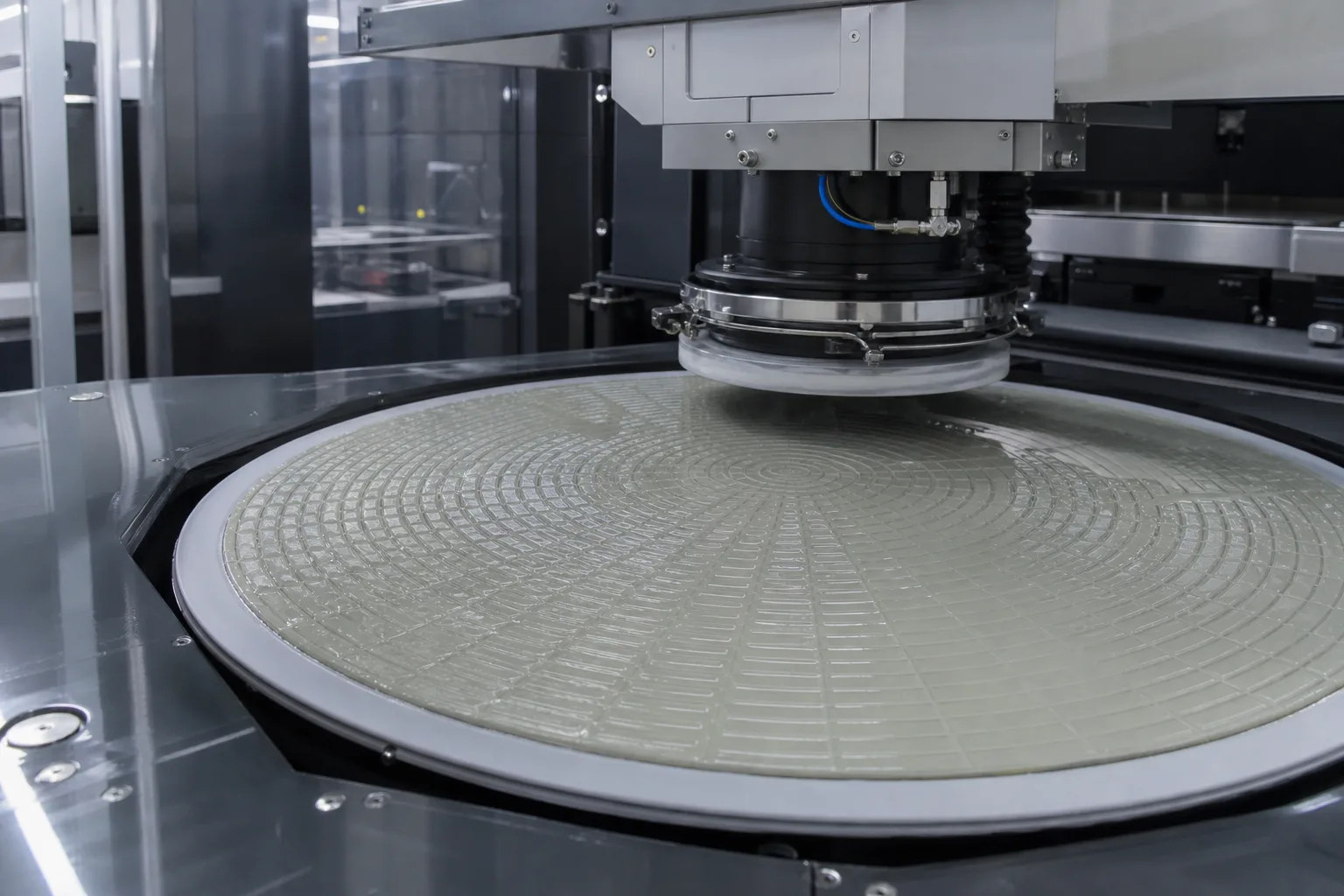
The cell is a platen, a pad, and a carrier head, not a deposition chamber. The wafer is pressed into a grooved polymer sheet. Both the head and the platen turn. High points see more pressure, so they come off faster than the valleys. That pressure difference is the planarization. A miss here is a leftover step, a thin film, or a scratched disk, not a lithography defect.
The pad is the work surface. Groove pattern and hardness decide how slurry moves and how the pressure spreads. A conditioner — usually a diamond disk — dresses the pad so it does not glaze. A glazed pad stops cutting evenly. When the removal rate walks, the first suspects are the pad, the conditioner, and the slurry line, not a mystery in the incoming stack.
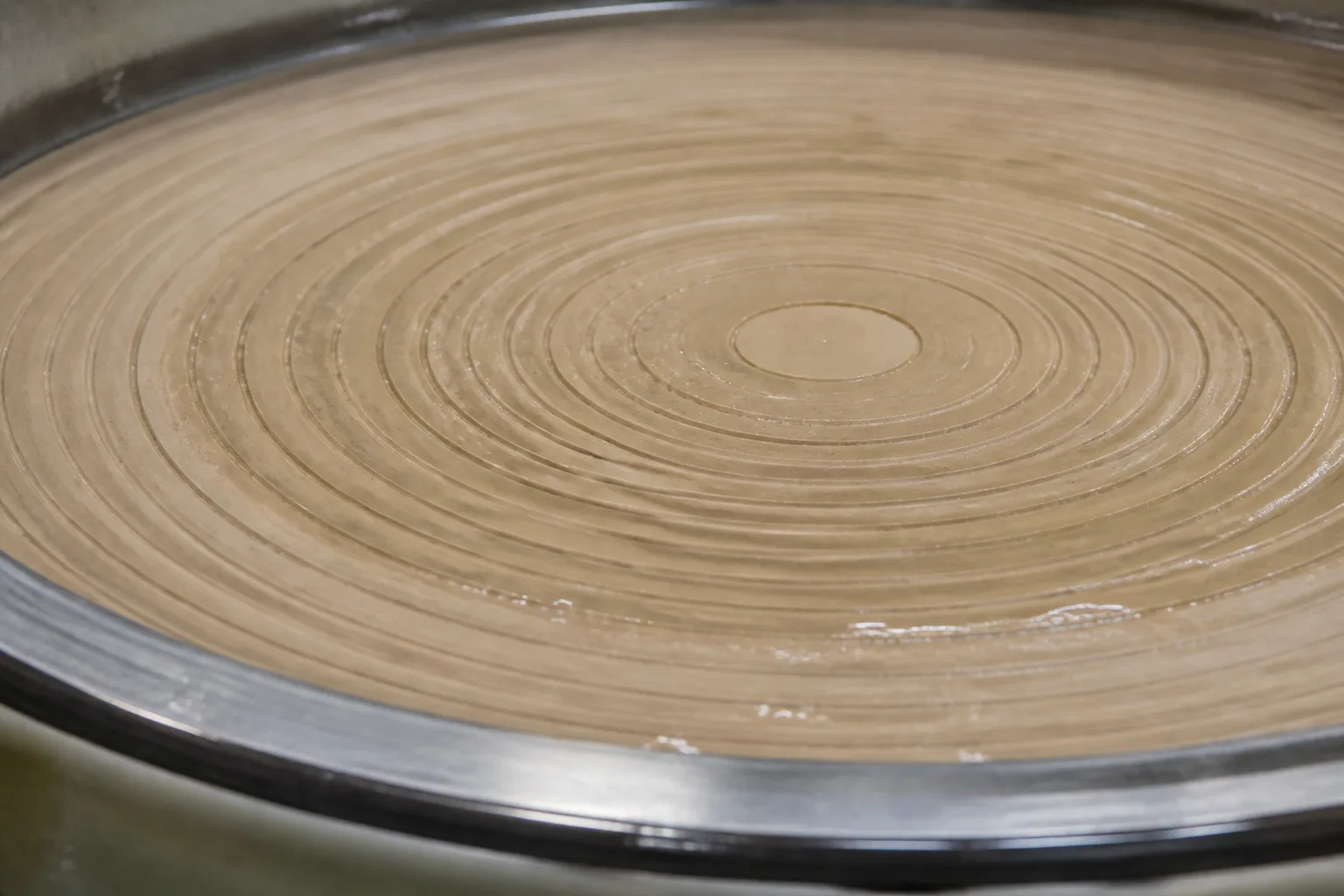
Slurry is the other half of the name. It is chemistry plus abrasive, mixed for the film on this step: oxide, tungsten, copper, or a barrier. The chemistry weakens or passivates the surface. The particles and the pad take material off. A copper slurry will not run an oxide stop the same way. The bottle on the tool is part of the process of record.
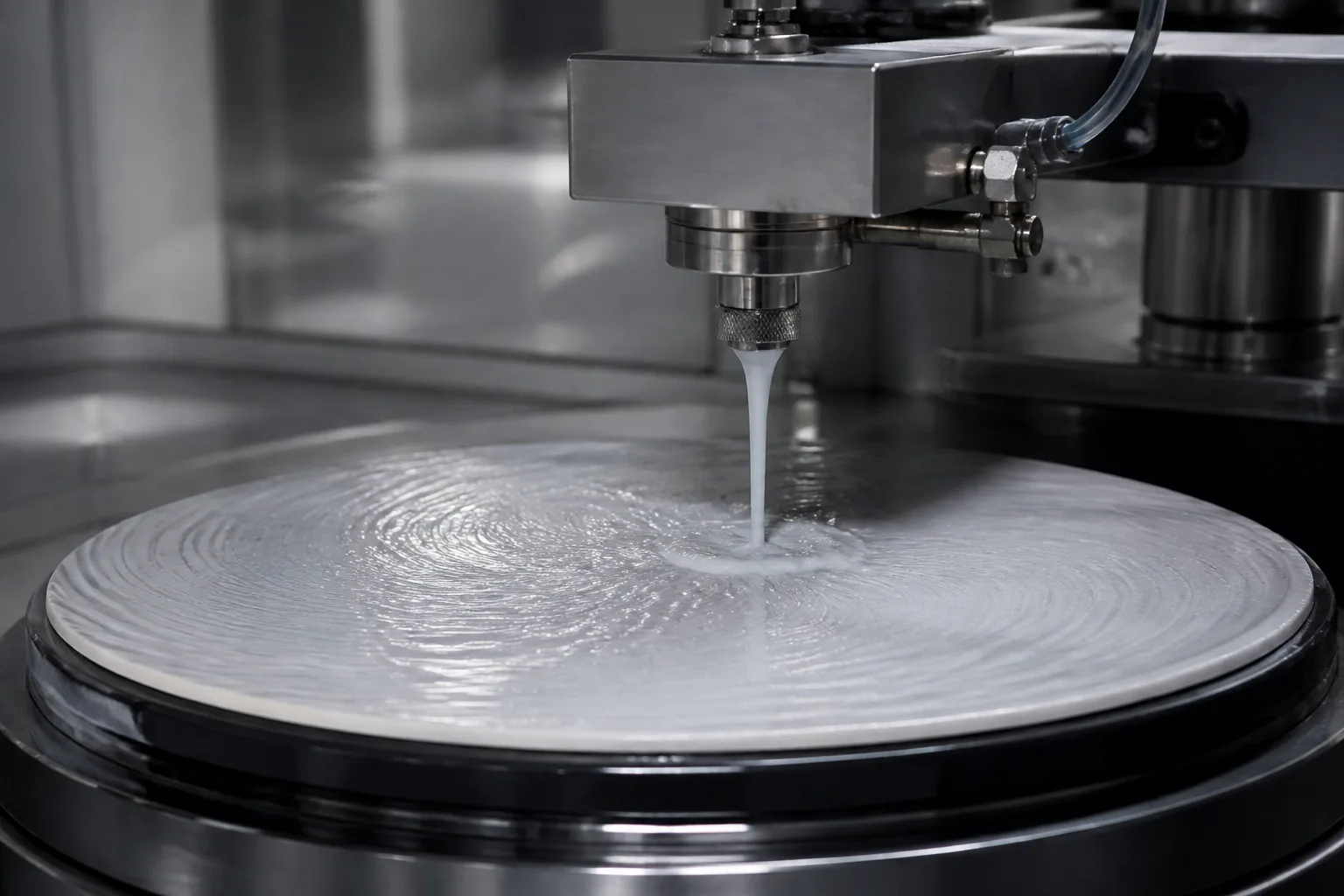
The stop is how the polish knows to quit. In shallow-trench isolation the usual stop is silicon nitride: oxide comes off faster than nitride, so the cut slows when the field oxide is gone. In a copper damascene the visit is more than one polish — copper, then the barrier — and the stop is a selectivity plus an endpoint, not a single film. Motor current, an optical signal, and a timed overpolish all show up on the same recipe card. Overpolish is not free.
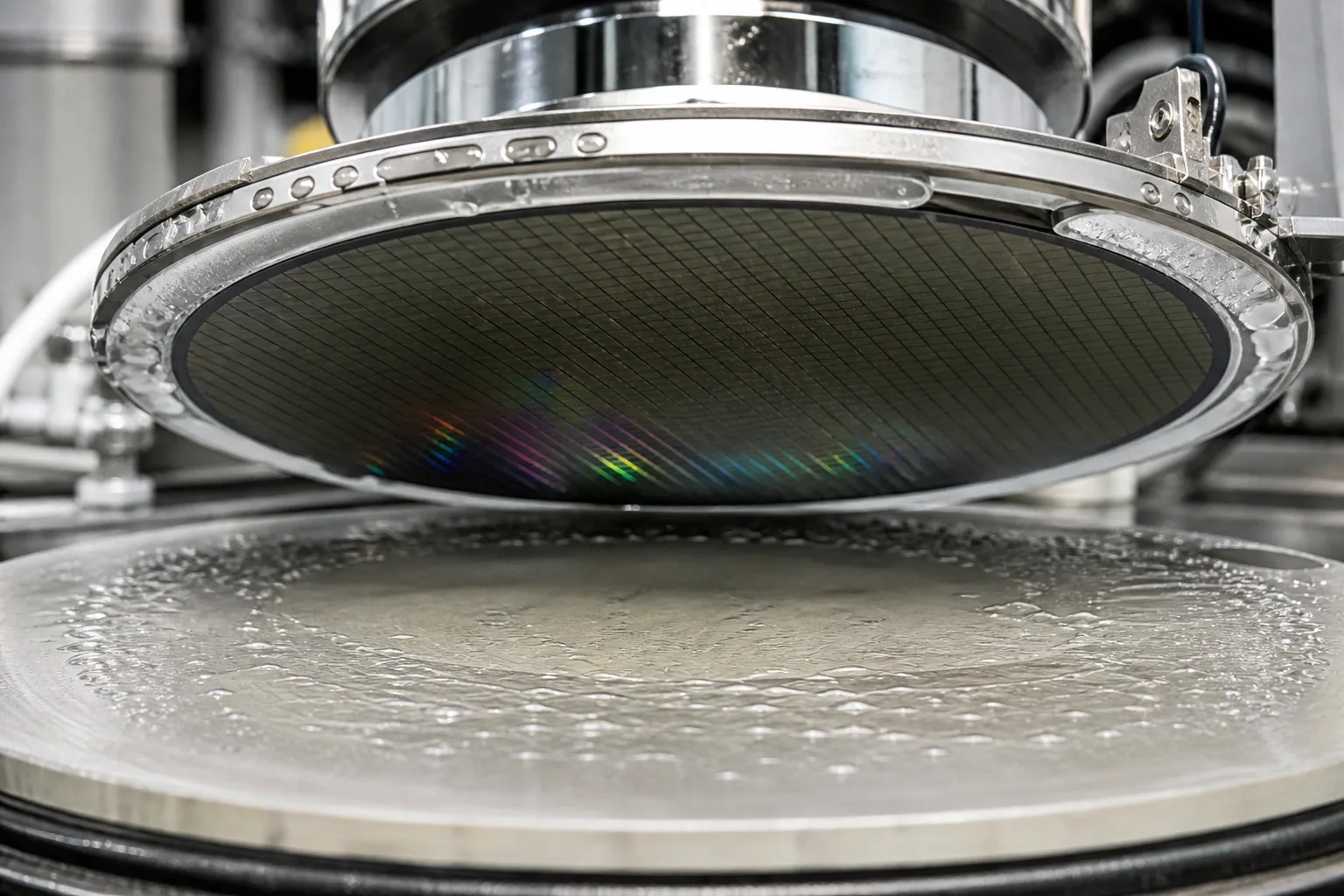
Dishing and erosion are what the overpolish buys. Dishing is a recess in a wide, softer feature — a fat copper line, a wide oxide fill — because the pad conforms into the soft area after the field is already clear. Erosion is the field itself dropping in a dense array, because that neighborhood polishes faster than a sparse one. Both are pattern-density problems. Dummy fill exists to keep the density from swinging. A globally flat wafer can still have a locally thin line.
CMP is the step that makes the next scanner shot possible. Lithography depth of focus does not forgive a step-height leftover from the last metal. The polish also leaves its mark on alignment targets and can add its own overlay fingerprint. The station is not cosmetic. It is a layer in the stack, with a pad, a slurry, a stop, and a leftover topography the next tool will see.
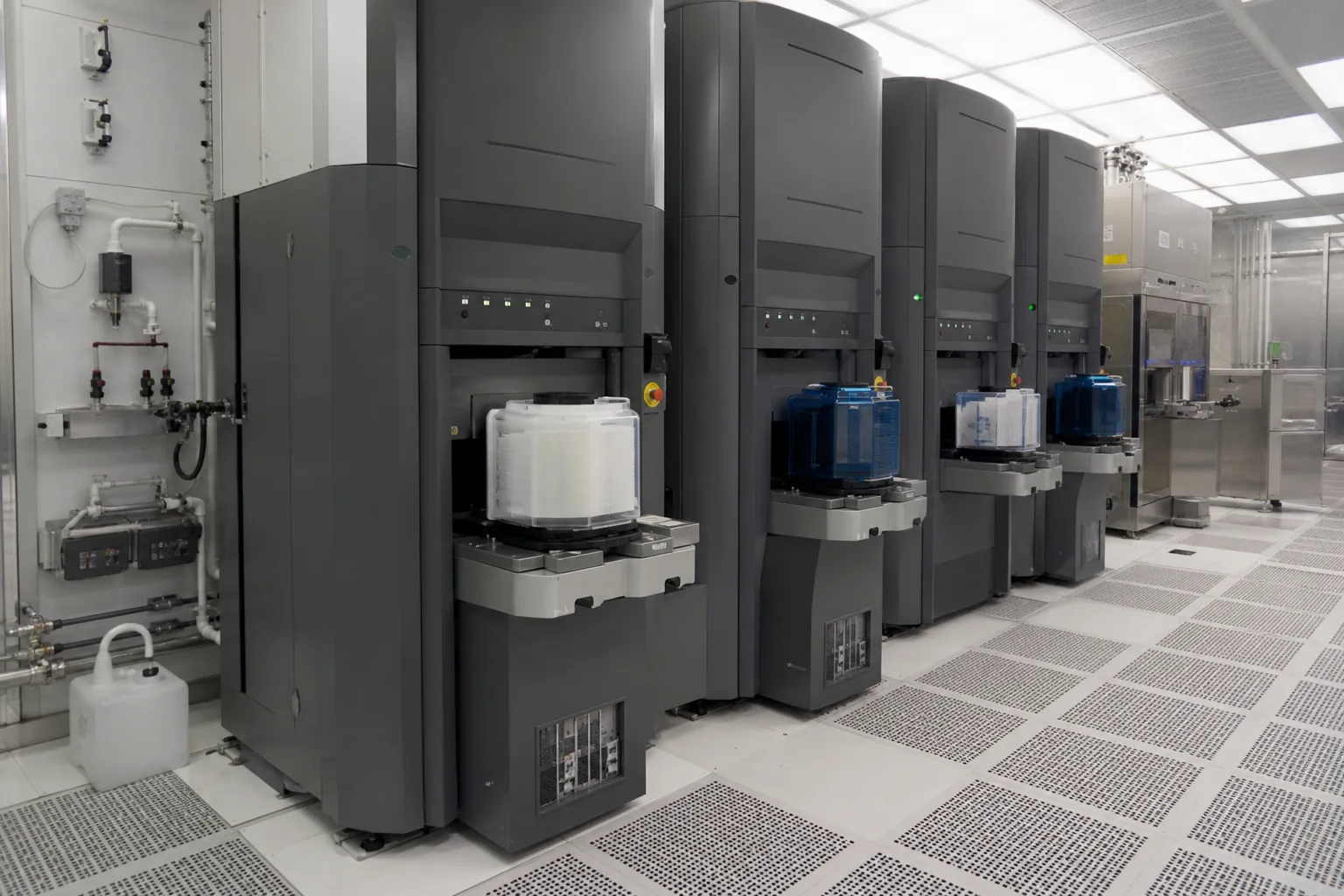
Three facts define the visit: what the pad is cutting, what the slurry is mixed for, and what the recipe uses as a stop. Those three answers are CMP on the line. A later deposition or etch is a different station with a different leftover.