Process
Why spacer-defined pitch is not drawn CD
The mix-up is a linewidth that gets asked to do a pitch’s job. A designer draws a twenty-nanometer line. The scanner prints it as a mandrel. A spacer film is deposited on the sidewalls, the flats are etched away, and the core is pulled. What remains can repeat tighter than anything that drawn line stood for. People then say the CD got smaller. The drawn object did not shrink. A different ruler took over.
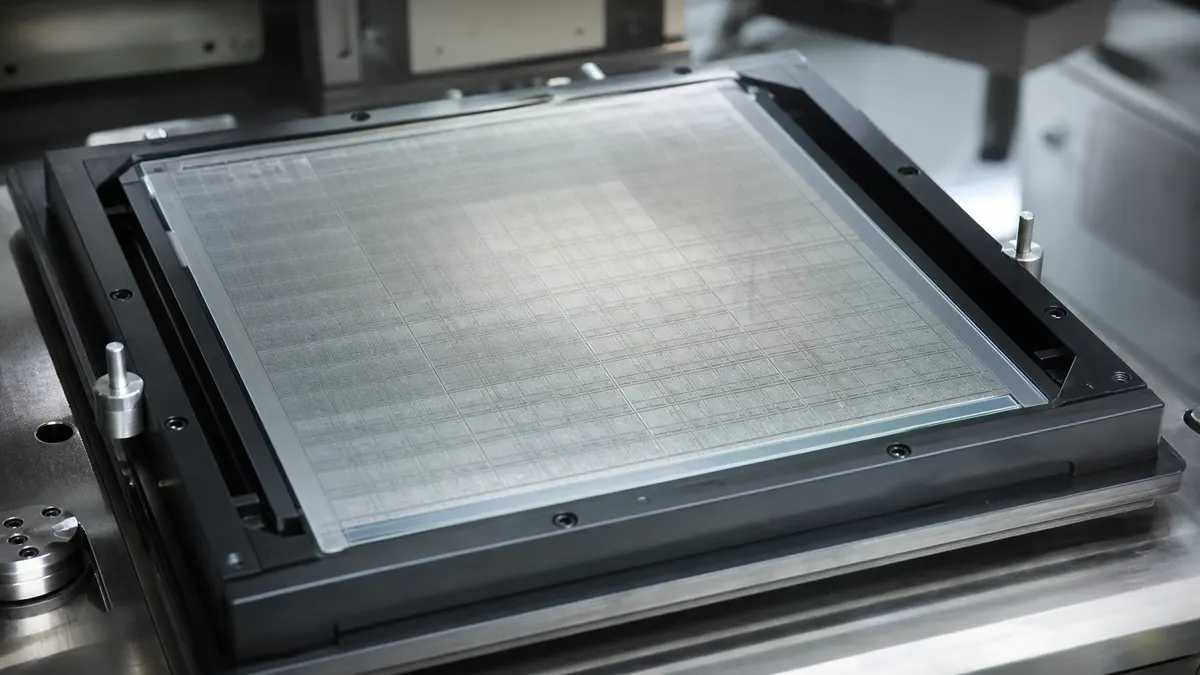
The first ruler is drawn CD. It is the feature the layout and the reticle agreed to print — usually the mandrel width — and the CD-SEM or scatterometry recipe that asks whether that object met target. The ITRS lithography tables treat mandrel size as its own control problem: mean-to-target and variation of the printed core, on the wafer, after etch if the mandrel was transferred into another film. That number answers how wide this object is. It does not answer how often the finished lines sit.
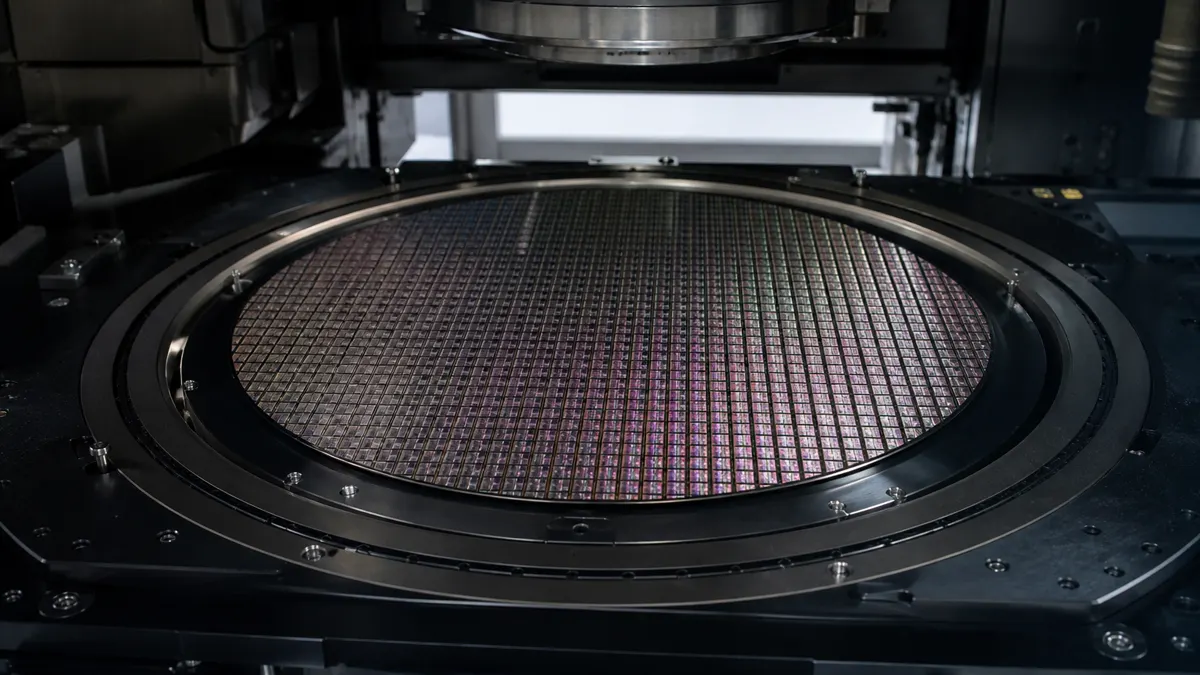
The second ruler is spacer-defined pitch. Self-aligned double patterning leaves two spacers for each printed core, so the repeat halves. Self-aligned quadruple patterning runs the transfer again: the first spacers become the next mandrel, and the repeat halves once more. ITRS lists sidewall-spacer patterning as a separate requirement set from a single printed CD. Deposition thickness sets the spacer width. The mandrel pitch, divided by two or by four, sets the period. Neither result is required to equal the drawn linewidth.
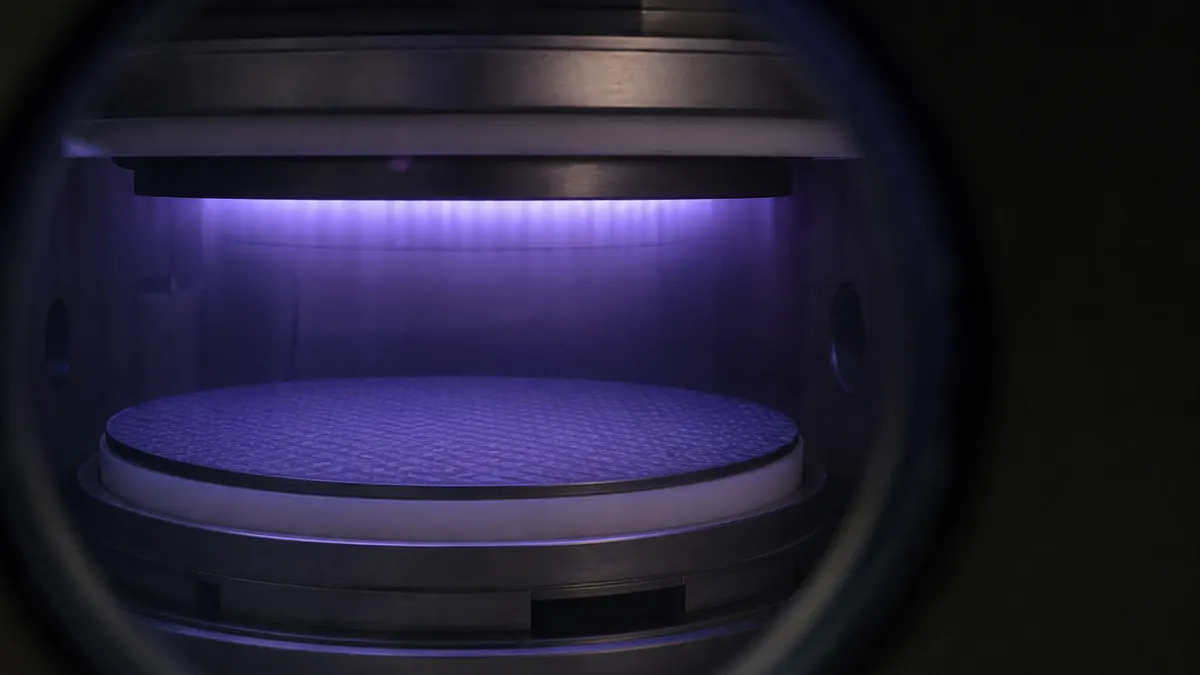
A twenty-nanometer drawn line can therefore sit next to a tighter array and still be the truth of the reticle. The spacer can be thicker or thinner than that line. The gap that used to be the mandrel and the gap that used to be the space between mandrels are different populations. When those two spaces do not match, the array walks. Pitch walking is a period error. It is not evidence that lithography printed a smaller CD.
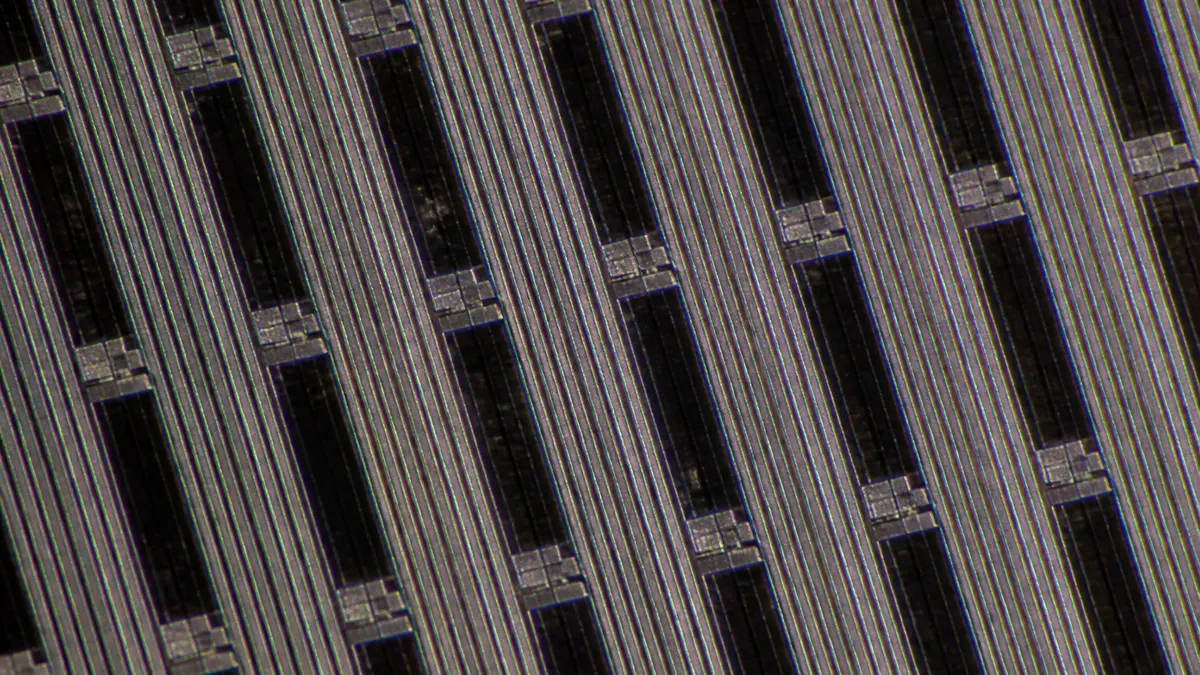
The limit is what a sidewall cannot invent. A spacer copies a wall. It does not draw a two-dimensional corner. Cuts, blocks, and dummy-line removal still need a later lithography, and that pass still has an overlay and a CD of its own. Deposition non-uniformity and spacer-edge roughness sit on the finished line even when the glass was clean. A repeating pitch that looks tighter than the drawn feature is a film-and-etch result.
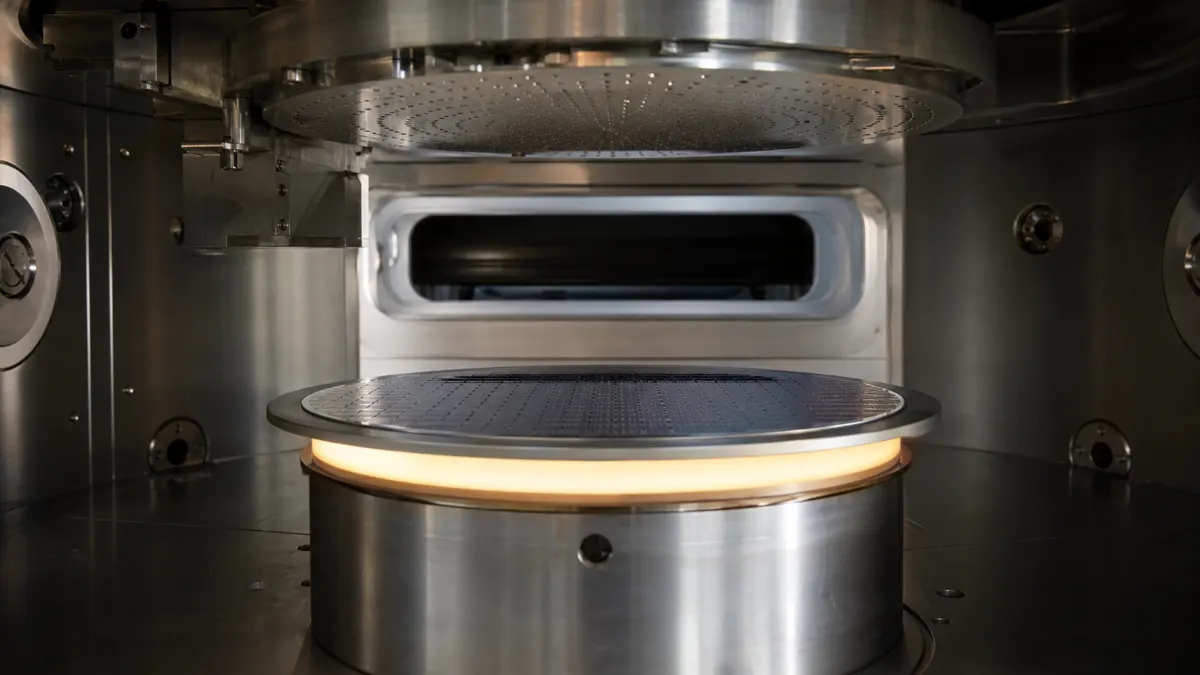
The finished array is still two measurements. A CD recipe on a spacer line asks about width. A pitch recipe asks about period. They can move independently: a fat spacer at a correct pitch, a thin spacer that walks. Treating the tighter repeat as proof that the drawn CD shrank is the same error as treating a node name as a gate length.
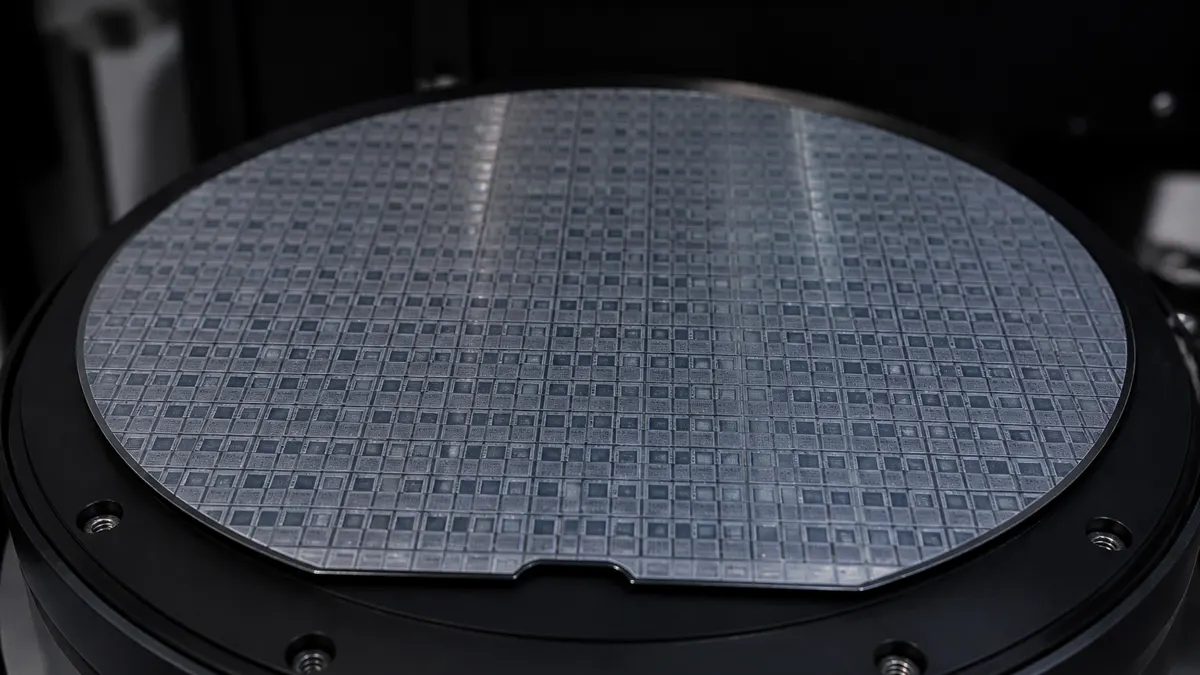
Read the reticle for what was drawn. Read the spacer for what repeats. When a slide puts a twenty-nanometer line beside a tighter pitch on the same wafer, the question is which object was the mandrel — not whether the drawn CD shrank.