Mix-ups
Why yield is not the same as utilization
Yield is the share of product that meets spec. Utilization is the share of a tool, bay, or fab that was busy. Both numbers are percentages. They appear on the same operations slide. They do not share a denominator, they do not move for the same reasons, and raising one can lower the other.
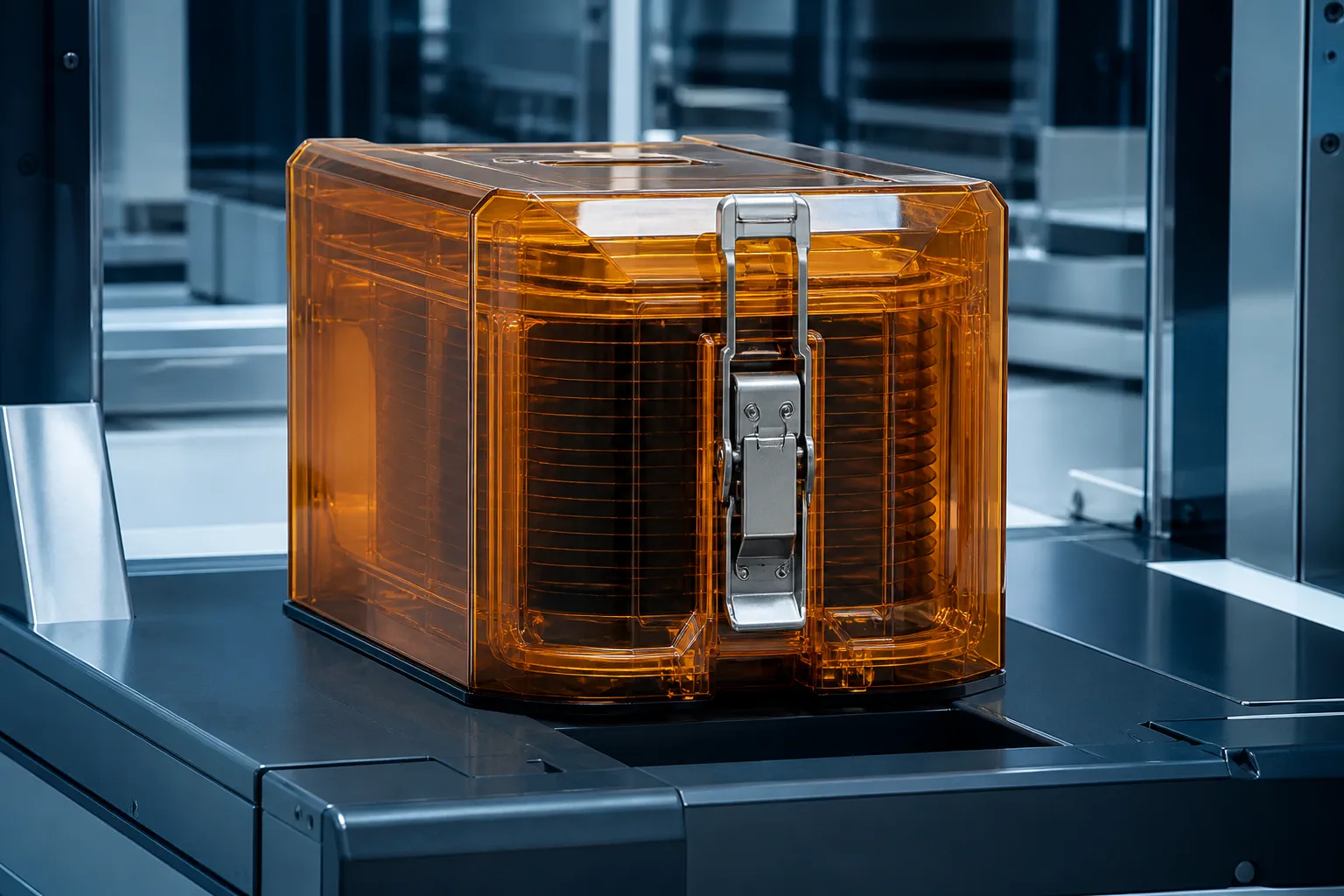
A FOUP on a loadport does not resolve the split. The pod may be full of good wafers, full of scrap, or empty because the tool is waiting. A green light and a yellow-amber box are a logistics picture. They are not a yield picture.
Line yield asks how many wafers that started a sequence also finished it. Die yield — often after probe — asks how many sites on a finished wafer meet the spec. Combined yield multiplies the two. Plants argue about the denominator: all sites, all printable sites, or all sites that were worth testing. None of those definitions is “how busy is the etcher.”
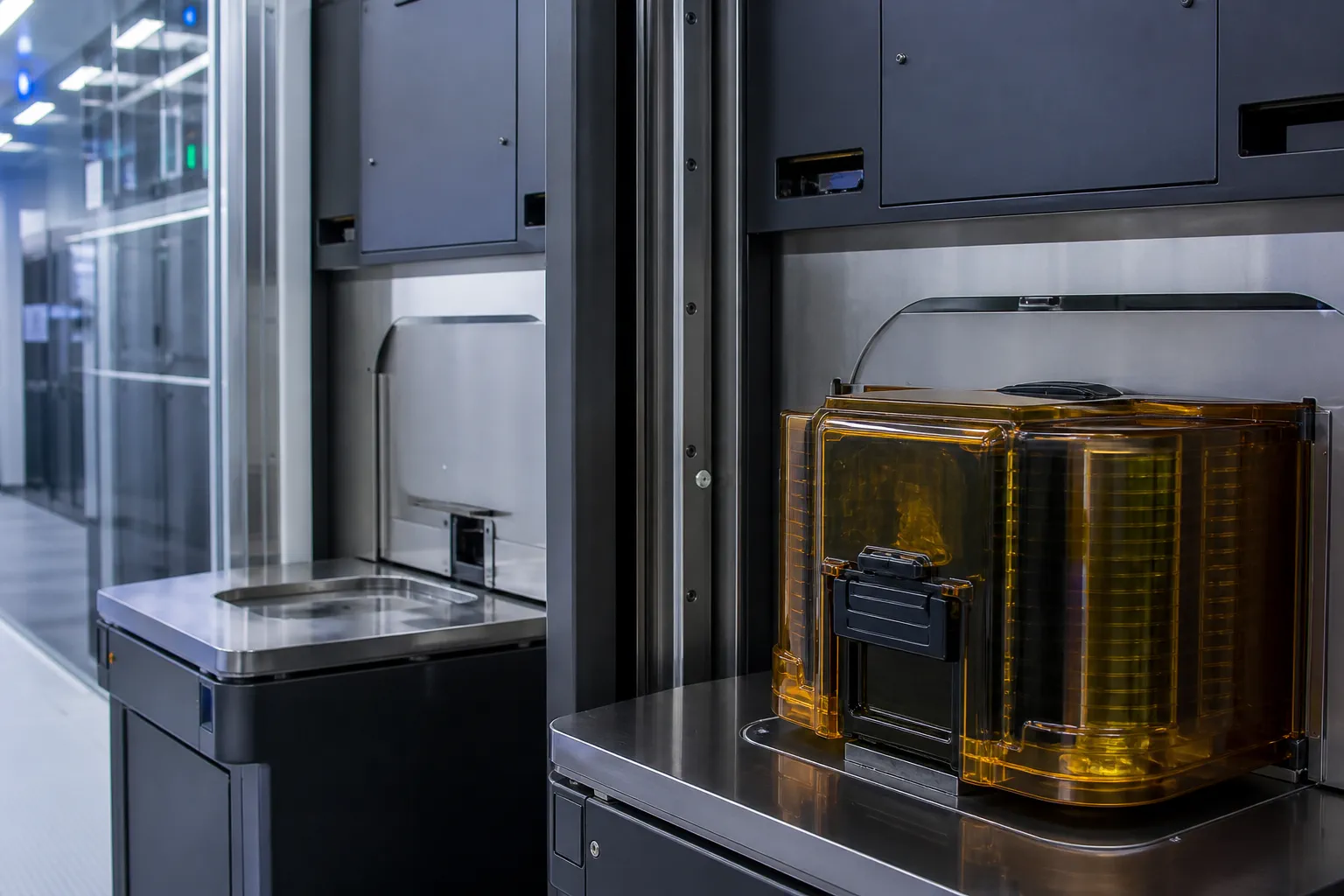
Utilization asks a capacity question: of the time this tool could have been processing, how much of that time was it processing? Some shops count only productive recipes. Some count any wafer on the chuck, including quals and monitors. Some quote fab utilization as wafer starts against nameplate starts. SEMI equipment-time categories split productive, engineering, standby, and nonscheduled time; the slide rarely says which bucket was used. The number is about capacity, not about whether the silicon will bin out.
The collapse is easy because both figures are percentages, both live on the same deck, and both get worse when a tool is sick. A dirty chamber can scrap wafers and also sit idle while it is cleaned. “We are at 70 percent” does not say which 70. The wrong 70 ships the wrong action: more starts into a line that is already making scrap, or a yield task force on a bay that is starved of lots.
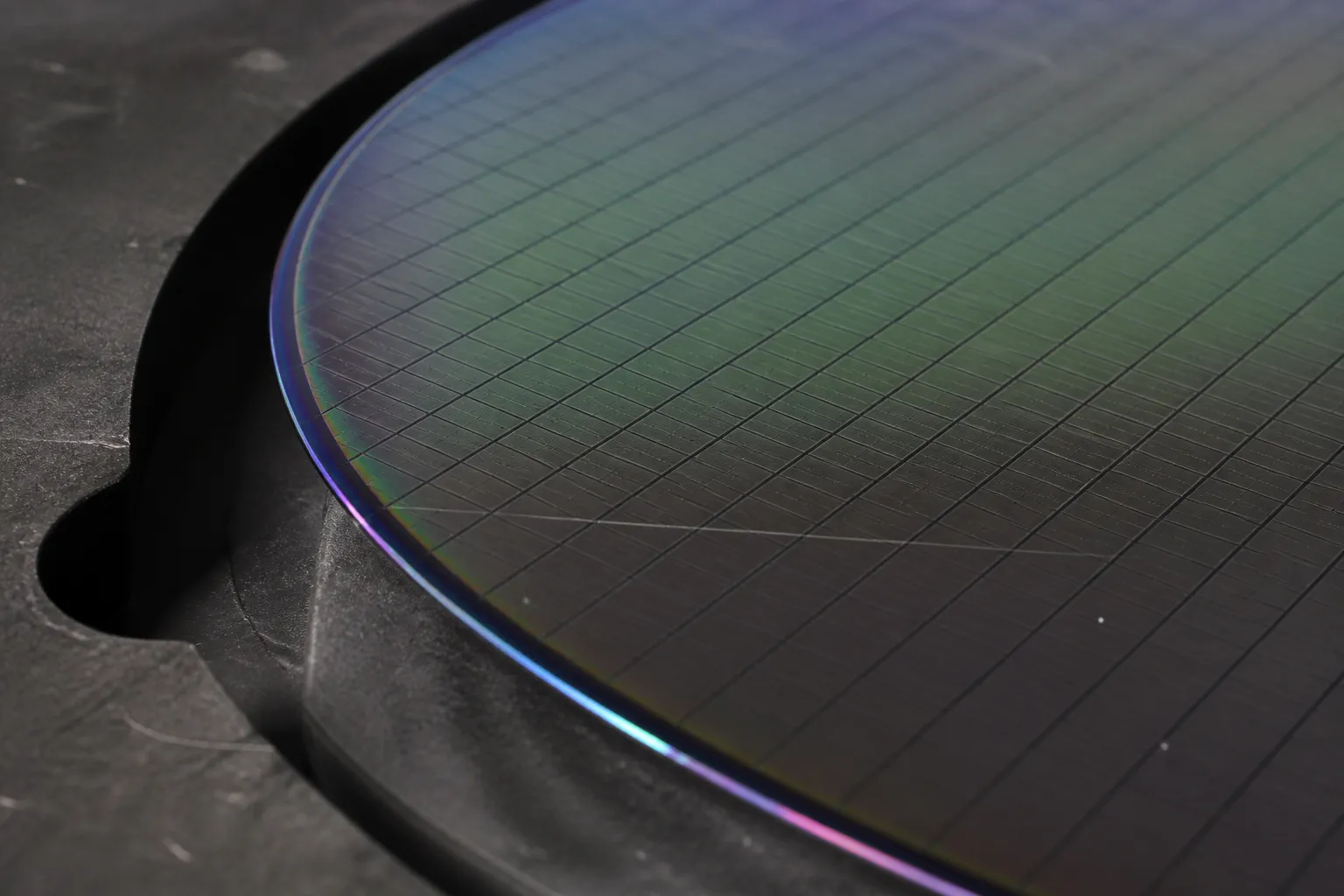
Defects belong to yield. A particle, a scratch, a misprocess, a weak via — those remove die or wafers from the good pile. A quiet, underloaded factory can post terrible yield if the recipe or the incoming material is wrong. A packed factory can post excellent yield if the process is stable and the constraint is demand or a bottleneck elsewhere.
Busy-ness belongs to utilization. A tool can run around the clock on monitor wafers and post a handsome utilization with no shippable die. A tool can sit idle because the previous step is down, and post a poor utilization while the wafers it already processed remain good. Filling every cassette does not make the product good. Emptying a bay does not make the product bad.
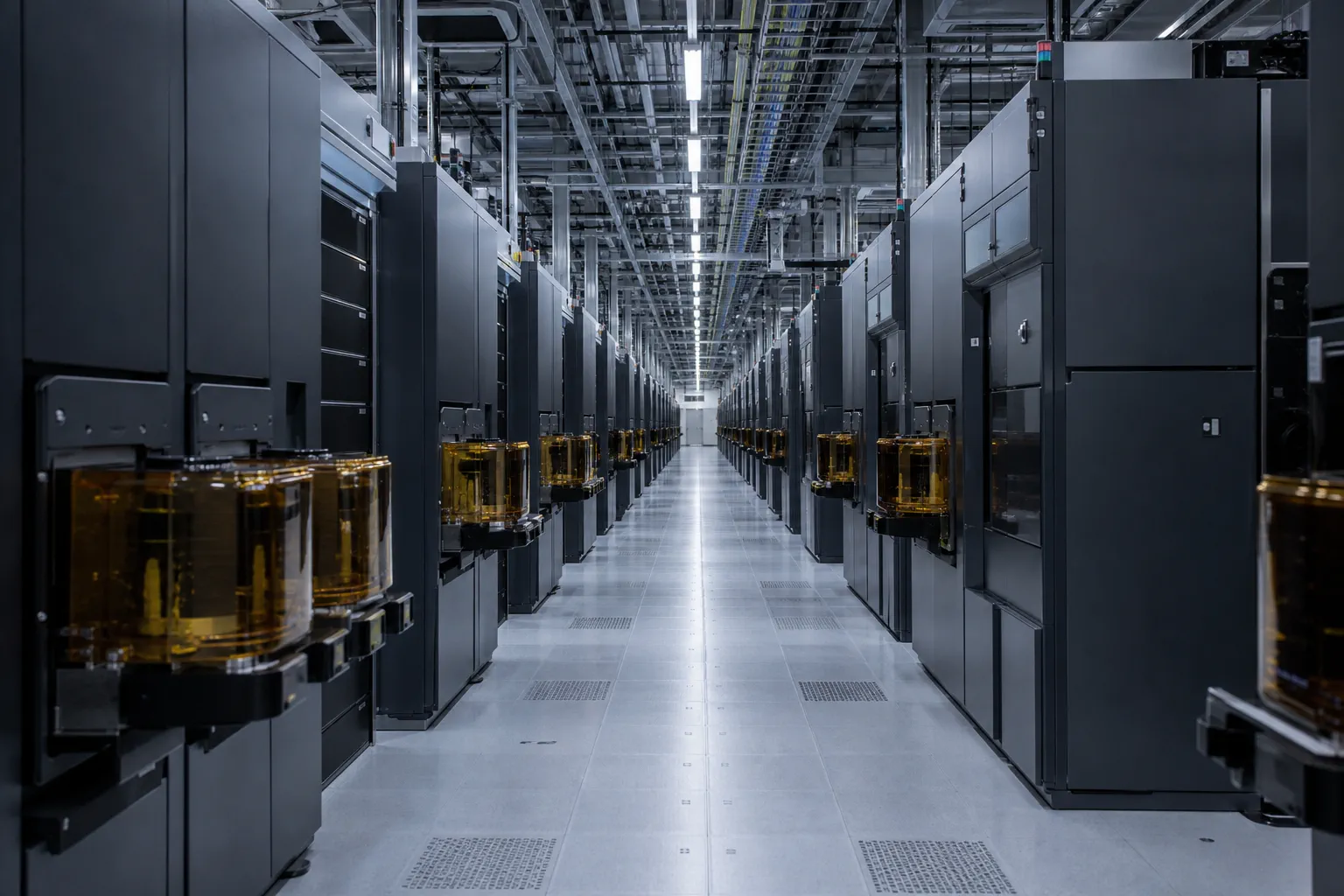
The aisle makes the confusion visual. Identical cabinets, repeating loadports, a few pods in motion: it reads as a capacity problem or a quality problem depending on which meter someone brought. Dispatch watches queues and idle time. Yield engineering watches maps, fail signatures, and inline defect data. They share a building. They do not share a definition.
There is a real coupling, just not an identity. High utilization on a dirty tool can drive more defects. Low utilization can hide a yield crash because too few wafers were tested to see it. A constrained litho cell can force the rest of the line to idle, which looks like a utilization problem and is a bottleneck problem. Treat the coupling as a conversation between two meters, not as proof they are one meter.
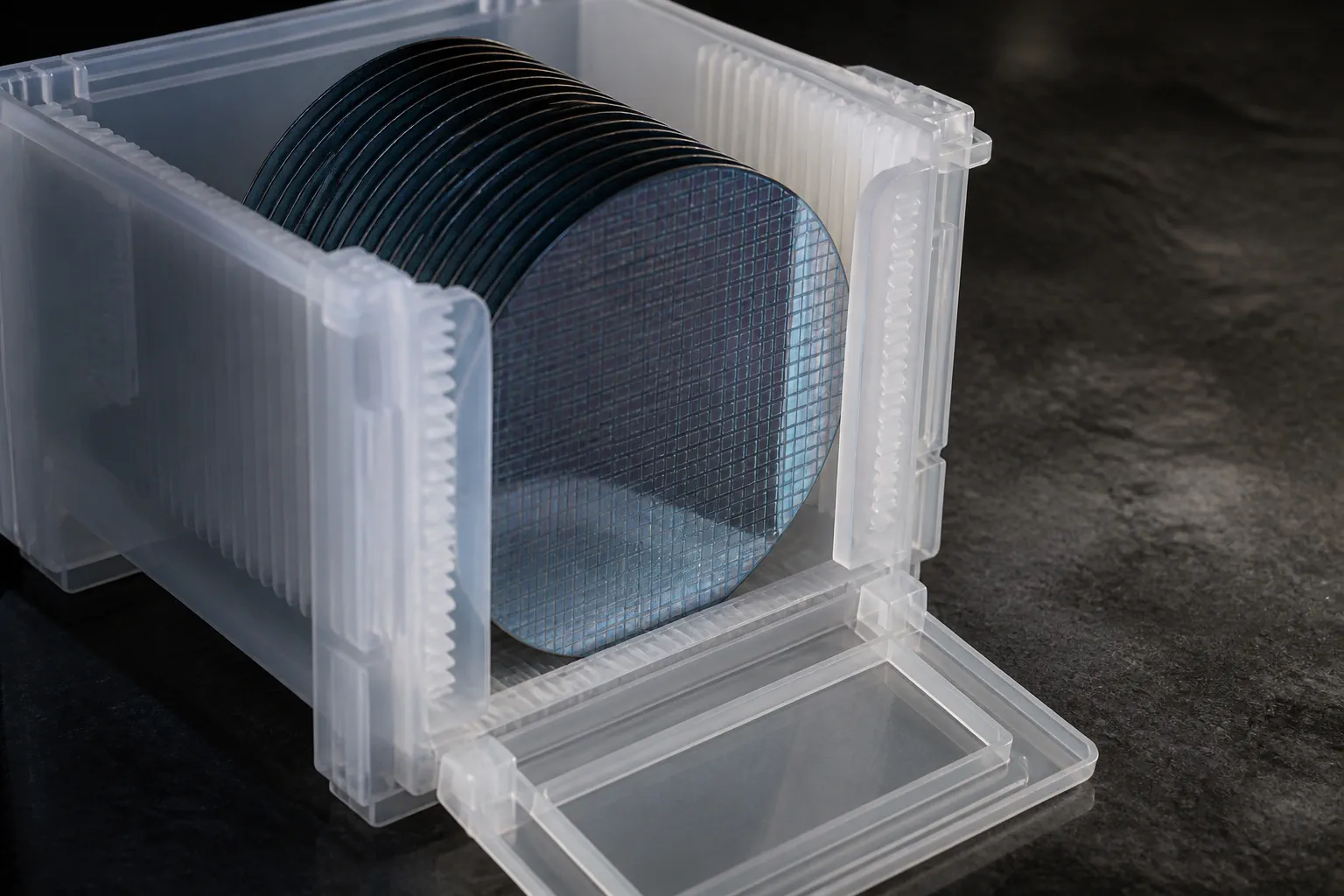
A cassette of wafers is the right object. Count how many wafers are in the box, and the picture is WIP or starts. Count how many of those wafers, or how many dies on them, will pass the next gate, and the picture is yield. Count how often the tool that empties that cassette was actually running, and the picture is utilization.
A percentage on the floor is unfinished until the denominator is named. Good die, good wafers, or lots that finished is yield. Time, starts, or nameplate is utilization. The numerator is the easy part.